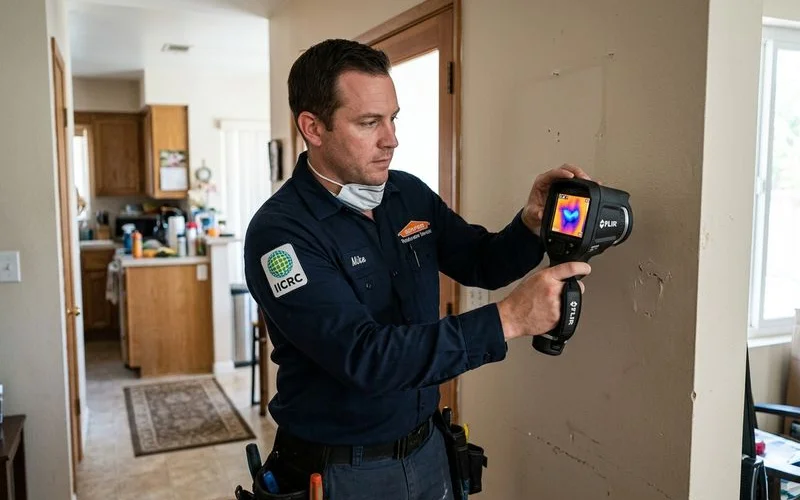
Technician using thermal imaging camera to detect moisture behind drywall

Trapped Water

Hidden Moisture Behind Drywall in Los Angeles

Water can seep into your walls and remain unseen, causing structural damage and mold. Identifying and removing this hidden moisture is crucial for your home's health.

Assistance is available for Los Angeles homeowners to find and address moisture hidden behind drywall, baseboards, and flooring, helping to prevent further deterioration and mold growth.

What to do about hidden moisture?

If you suspect hidden moisture behind your drywall, it's important to act promptly. Use a moisture meter to check suspect areas. If readings are high, or if you notice signs like staining or musty odors, consider contacting professionals. They can use specialized equipment like thermal cameras and moisture meters to pinpoint the source and extent of the water. Early intervention can help prevent costly repairs and mold.

Signs of Hidden Water

Even without a visible leak, hidden moisture can manifest in several ways. Look for unexplained water stains on walls or ceilings, peeling paint or wallpaper, warped baseboards, or soft spots in the drywall. A persistent musty odor, especially in warmer Los Angeles conditions, can also indicate trapped water. If you live in an older multifamily building, be aware that slow leaks behind cabinets or walls are common.

Detecting Moisture

Specialized tools are essential for finding water that isn't immediately apparent. Moisture meters can measure the water content in building materials like drywall and wood. Thermal imaging cameras detect temperature differences caused by moisture, making it easier to map out wet areas. These methods are critical for understanding the full scope of the problem before any repairs begin.

Potential Damage

Unaddressed hidden moisture can lead to significant structural damage over time. It can compromise the integrity of drywall, insulation, and framing. Furthermore, damp conditions create an ideal environment for mold to grow, which can affect indoor air quality and pose health risks. In Los Angeles's warm climate, drying out these hidden areas quickly is essential to prevent mold proliferation.

When to Seek Professional Help

If you discover or suspect hidden moisture, it's advisable to consult with water damage restoration professionals. They have equipment and knowledge to help accurately locate the water, assess the damage, and perform thorough drying and remediation. Before work commences, confirm that any necessary permits are obtained and that the scope of work is clearly defined, especially if insurance is involved.

Checking for Hidden Moisture

  • Inspect walls and ceilings for new stains or discoloration.
  • Check baseboards and flooring for signs of warping or softness.
  • Note any persistent musty or damp odors.
  • Use a moisture meter on suspect areas if available.
  • Consider thermal imaging for a more precise assessment.
  • Document all findings with photos or notes.
  • Contact a water damage professional for evaluation.

Related Issues

Explore other common water damage problems homeowners in Los Angeles face and learn how to address them effectively to protect your property.

Common Questions About Hidden Moisture

Can hidden moisture cause mold?

Yes, damp conditions created by hidden moisture are a primary breeding ground for mold. Even small amounts of trapped water can lead to mold growth within 24-48 hours.

How do professionals find hidden moisture?

Professionals use advanced tools like moisture meters, thermal imaging cameras, and hygrometers. These devices help them detect and measure water content in materials and identify temperature anomalies caused by moisture.

Is asbestos a concern with hidden moisture?

In older Los Angeles homes, materials that might contain asbestos could be affected by moisture. If your home was built before 1980, it's wise to consider asbestos testing before disturbing potentially contaminated materials.

What happens if hidden moisture isn't fixed?

If left unaddressed, hidden moisture can lead to severe structural damage, rot, mold infestations, and compromised indoor air quality, resulting in more extensive and costly repairs.