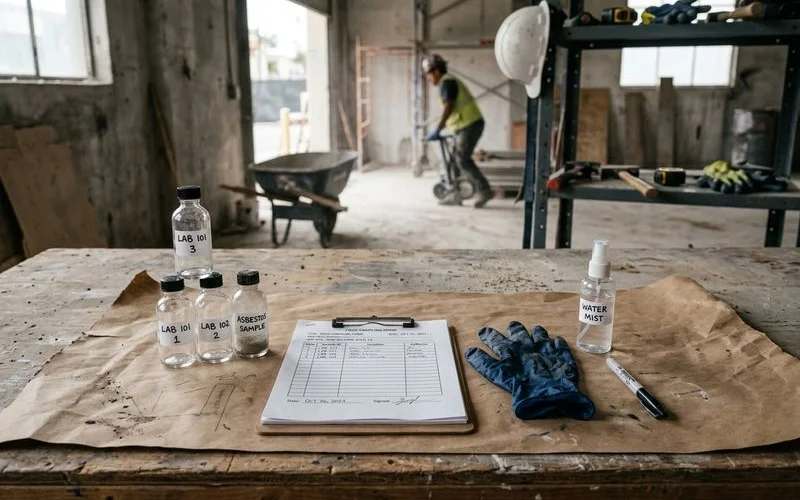
Asbestos sampling kit with labeled specimen bags

Older Home Safety

Asbestos Testing Before Water Damage Repair in Los Angeles

Water damage can affect older Los Angeles homes built with materials that may contain asbestos. Disturbing these materials without proper testing can pose serious health risks.

Before starting any repairs on water-damaged areas like flooring, drywall, or ceilings in older properties, it's essential to consider asbestos. Understanding the risks and necessary precautions ensures your home is safe.

Why Test for Asbestos Before Water Damage Repair?

Many older Los Angeles homes, especially those built before the 1980s, contain asbestos in common building materials like popcorn ceilings, vinyl flooring, and insulation. Water damage can compromise these materials, making them friable and releasing asbestos fibers into the air when disturbed. Testing is crucial to identify these hazards before repairs begin, preventing potential exposure and ensuring a safe restoration process for your health and your home.

Understanding Asbestos Risks in Older Homes

Los Angeles has many older homes and buildings constructed with materials that often contained asbestos for fire resistance and insulation. Common culprits include popcorn ceilings, vinyl floor tiles, pipe insulation, and old drywall. When these materials are damaged by water, they can become brittle, and any disturbance during cleanup or repair can release microscopic asbestos fibers into the air.

When to Suspect Asbestos

If your home was built before 1980, assume materials like textured paint, insulation, floor tiles, and ceiling tiles could contain asbestos. Water damage can make these materials more fragile. If you notice water damage affecting these areas, it's wise to pause and consider professional asbestos testing before proceeding with any demolition or repair work.

The Importance of Professional Testing

DIY asbestos testing is not recommended due to the health risks involved. Certified asbestos inspectors use specialized equipment and protocols to safely collect samples for laboratory analysis. This professional assessment provides a clear understanding of what materials are affected and the necessary steps for safe removal or encapsulation, especially critical when water damage is present.

Safe Repair and Restoration Practices

Once asbestos is identified in water-damaged areas, a specific protocol is needed. This usually involves containment of the affected area, specialized personal protective equipment for workers, and proper disposal of asbestos-containing materials. Ensure any contractor performing water damage repairs is aware of potential asbestos and has protocols in place or works with certified asbestos abatement professionals.

Before Repairing Water Damage in Older Homes

  • Identify the age of your home and potential asbestos-containing materials.
  • Note the location and extent of water damage to suspect materials.
  • Contact a certified asbestos inspector for professional testing.
  • Obtain a clear report on asbestos presence and type.
  • Consult with restoration professionals experienced in asbestos situations.
  • Ensure a safe abatement plan is in place if asbestos is found.
  • Verify all permits and regulations are met before work begins.

Related Water Damage Concerns

Beyond asbestos, other issues can arise after water damage, especially in older Los Angeles properties. Understanding these can help you address the full scope of the problem.

Asbestos and Water Damage FAQs

Do all old homes in Los Angeles have asbestos?

Not all, but many homes built before 1980 contain asbestos in various building materials. It's a common concern, especially when water damage occurs.

Can water damage make asbestos more dangerous?

Yes, water damage can weaken asbestos-containing materials, making them more likely to release fibers when disturbed during repairs.

What if I only see a small amount of water damage?

Even small water damage can affect asbestos materials. Professional testing is the safest way to know for sure before any work starts.

Who should perform asbestos testing?

Only certified asbestos inspectors should collect samples. They follow strict safety procedures to protect themselves and your household.